One pot polenta caponata

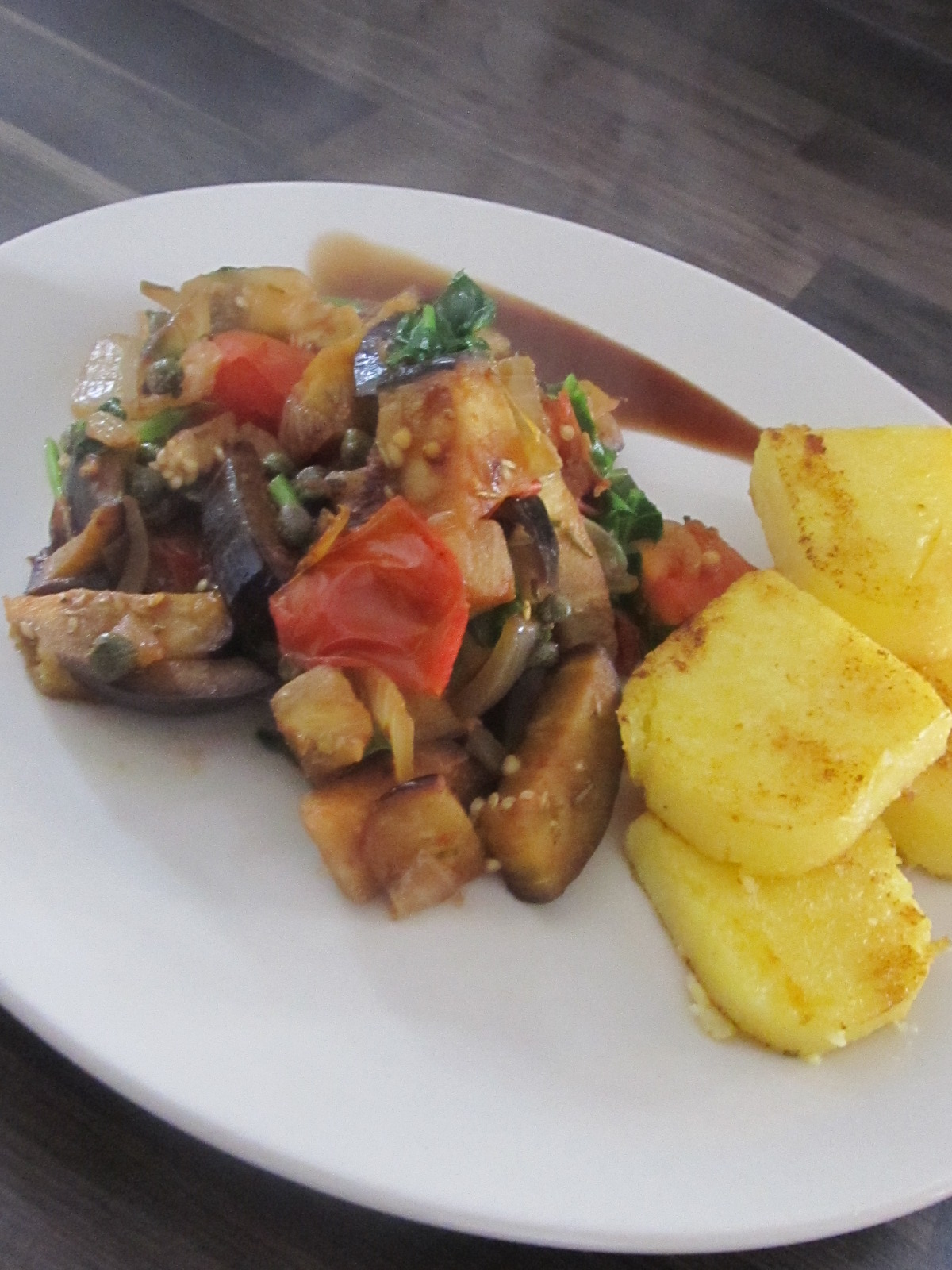
This one pot aubergine and polenta meal is another quick and easy dish; ideal for a tasty midweek treat and fully of lovely veggies as well as some great gluten free carbs. Start by frying 1 large chopped onion for 3 -4 minutes in a large pan, then add 1 chopped aubergine, a sprinkle of salt and some rosemary (you will notice how much I love rosemary as the blog posts continue!) then continue to fry for another 5 minutes. I really enjoy eating and cooking with aubergines. Aubergines are really low in calorie and a filling addition to a lot of meals. They are also really versatile and go really well with Mediterranean, Asian and middle eastern flavours which means they work well in a lot of my favourite meals! Aubergines are also high in dietary fibre, vitamins B1 and B6 and minerals making them another one of the super vegetables I enjoy so much.
Post 7 photo

As the aubergines start to brown and soften add 4 roughly chopped vine tomatoes and continue on the heat for another 5 minutes. One of the great things about this meal is that you don’t have to chop finely at all as a caponata is a really rustic Italian stew and the tomatoes, aubergine and onion will all shrink down and integrate taking on loads of flavour as they do.

To give this dish a real dose of the Mediterranean I add a dessert spoon of capers and allow them to sizzle with the other veggies for another 5 minutes. Capers are a really tasty ingredient, although the pickling and production methods do make them higher in sodium due to the added salt so you do have to be careful with quantities. On the other side of the caper coin they do however have great antioxidant properties containing rutin and quercetin which have great healing properties.

At this point the caponata is nearly ready… nearly… not long now… to save on washing up (a key priority of mine) I actually at this point put the caponata to one side in a separate dish and use the same pan to cook the polenta. Polenta is a great addition to a coeliac diet, or in fact any diet as it is made out of maize or cornmeal and is really filling. Polenta is an easy ingredient to make from scratch but I often use ready made polenta as it is so readily available and predominantly ethical (as with Arborio rice in previous blog posts polenta sold in the UK is as far as I have found produced in Italy and should be covered by EU regulation on employment and environmental laws). I cut the ready made polenta into slices about 1.5cm thick and then lightly fry on each side for a couple of minutes until golden and soft. I then dish up the polenta and pop the caponata back into the same pan again.

At this point I then add handfuls of chopped spinach to the caponata and allow it to wilt stirring through the caponata. Once the superfood spinach is wilted it is time to dish up and get stuck in, I often eat this with a drizzle of balsamic to season as it sets the taste off beautifully!
Warm courgette and chickpea salad

Chickpeas are a great addition to vegetarian and vegan diets as they are a brilliant source of protein as well as being healthy and filling. I love chickpeas and really enjoy using them in a range of different dishes. They bring a real feeling of sunshine to all dishes and work really well with warm and aromatic flavours.

Post 5 photo

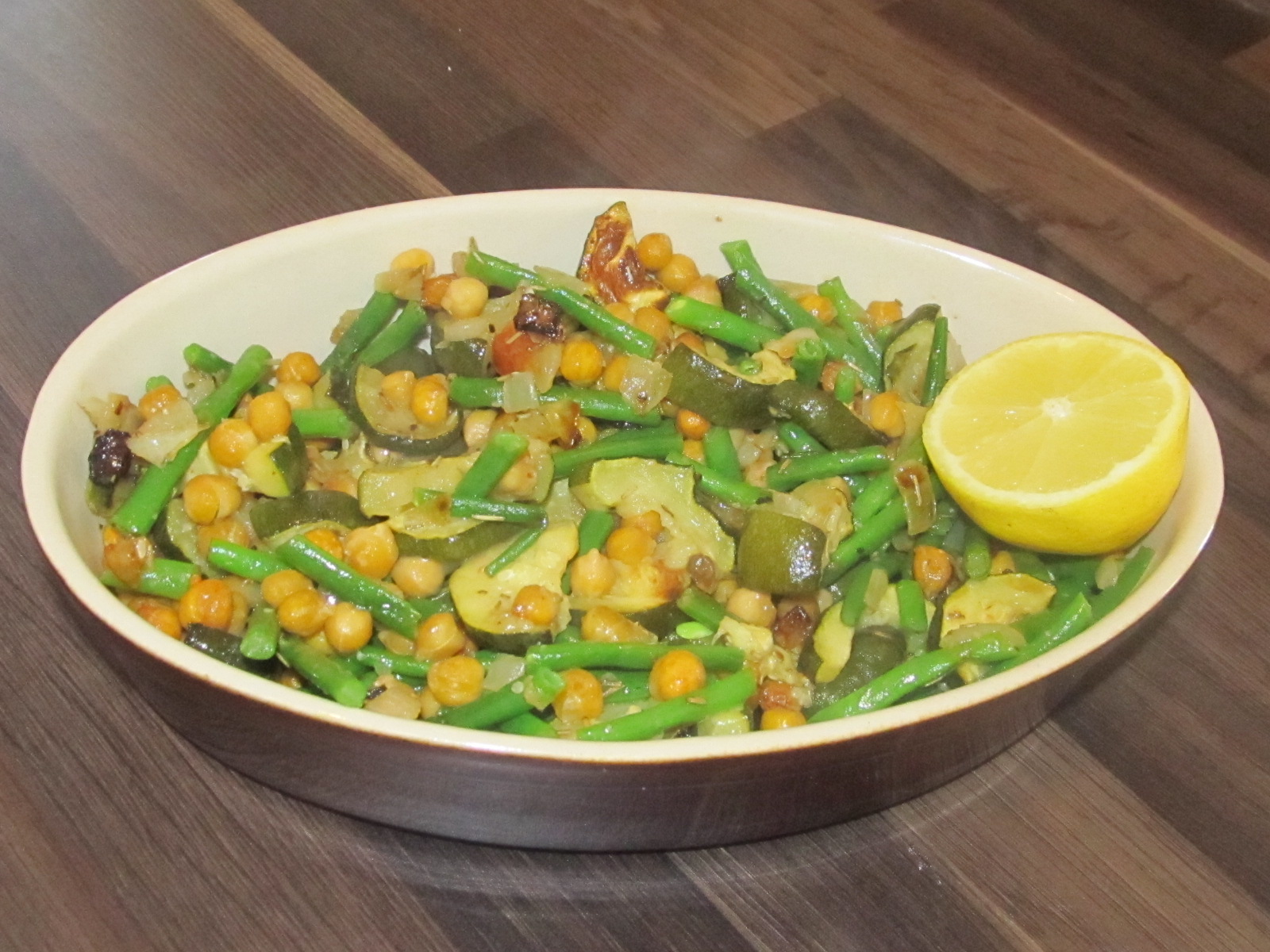
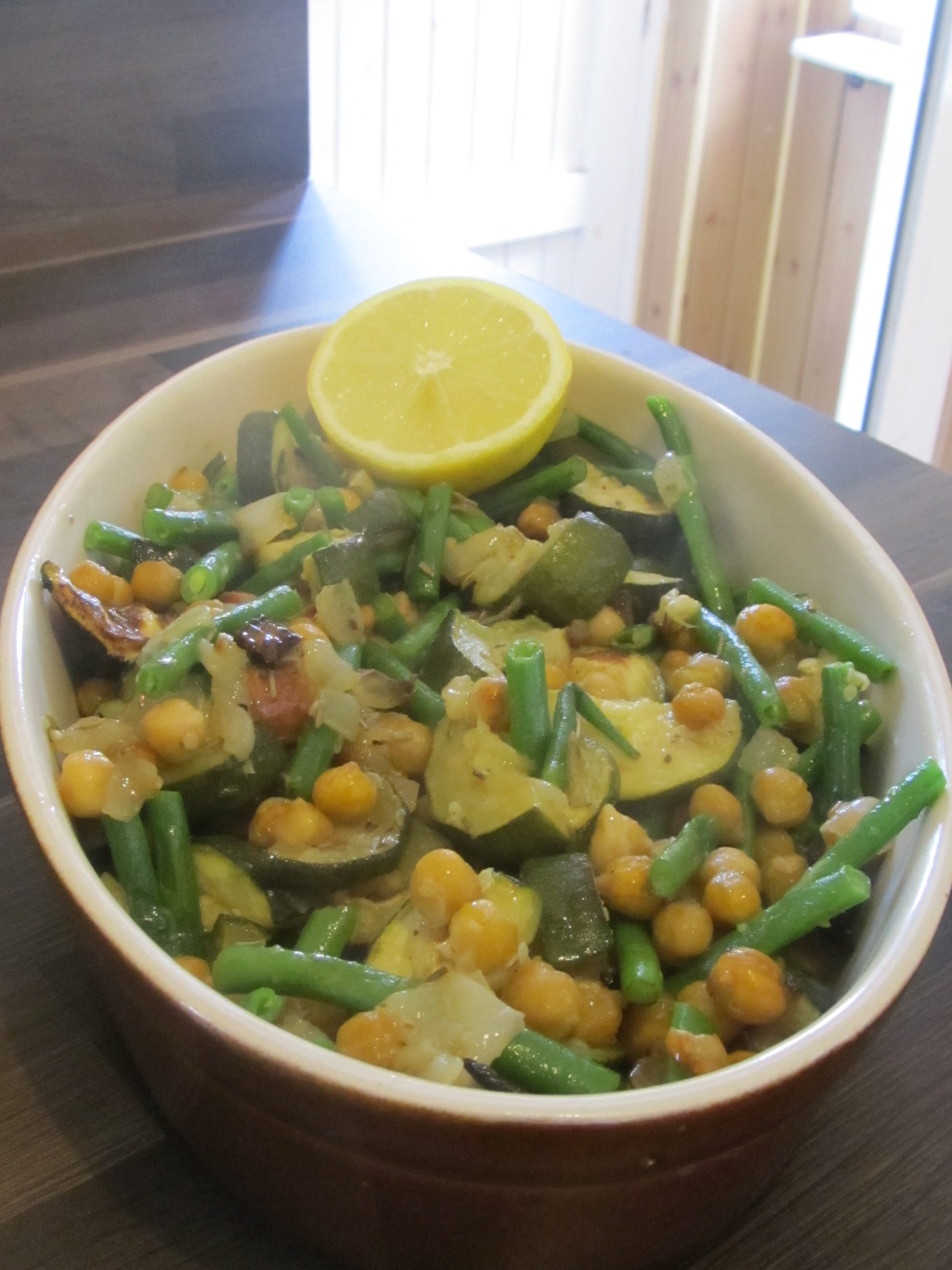
This salad is great served warm or chilled and is sure to give you a real shot of vegetables. It makes a lovely, colourful lunch and is incredibly filling.

I love toasted chickpeas as I enjoy the crunchy texture they get. I start this recipe with about a dessert spoon olive oil, a clove of minced garlic, a sprig of chopped fresh rosemary and a small amount of rock salt and pepper, I mix this in a large roasting tin and allow this to warm up in the oven on about 200 C. After this has warmed for 5 minutes I add the vegetables. I finely chop 1 large onion and chop 2 medium courgettes into slices and then halve the slices. I then pop all of this into the roasting pan and use a wooden spoon to stir it around allowing the seasoning and oil to lightly coat all the veg. The next step is easy – leave in the oven for about an hour and go and get on with something else, hopefully something fun (not cleaning)

Green beans are another vegetable I think are totally delish and which go really well in warm salads. Green beans have loads of vitamins and as vitamins are best maintained in vegetables which are steamed I use a microwave steamer to cook the green beans in this recipe. It only takes 90 seconds and the beans are perfect. I then mix all the roasted vegetables with the chopped green beans and finish it off with squeezed juice from half a lemon to make a tangy, tasty dressing.

This recipe has loads of depth of flavour and is a joy to prepare and eat. You will never be jealous of dishes with gluten or lactose in again!

Post 5 photo 2

The butternut squashiest butternut squash risotto

Before I was diagnosed with lactose intolerance and Coeliac’s disease I used to make a butternut squash and goats cheese risotto. Obviously the goats cheese is a huge no-no now but I have found that with some extra veggies and some perfect home grown herbs this risotto can be even better than ever before!

Post 4 photo
Butternut goodness and home grown rosemary

Butternut squash is a really healthy and powerful food. Technically a fruit the butternut squash is full of anti oxidants, dietary fibre and also potassium which can help to strengthen bones and improve bone health; ideal for Coelaic’s trying to boost levels of support against osteoporosis. Butternut squash is also full of vitamin C to keep the immune system ticking along and boost against the snuffles.

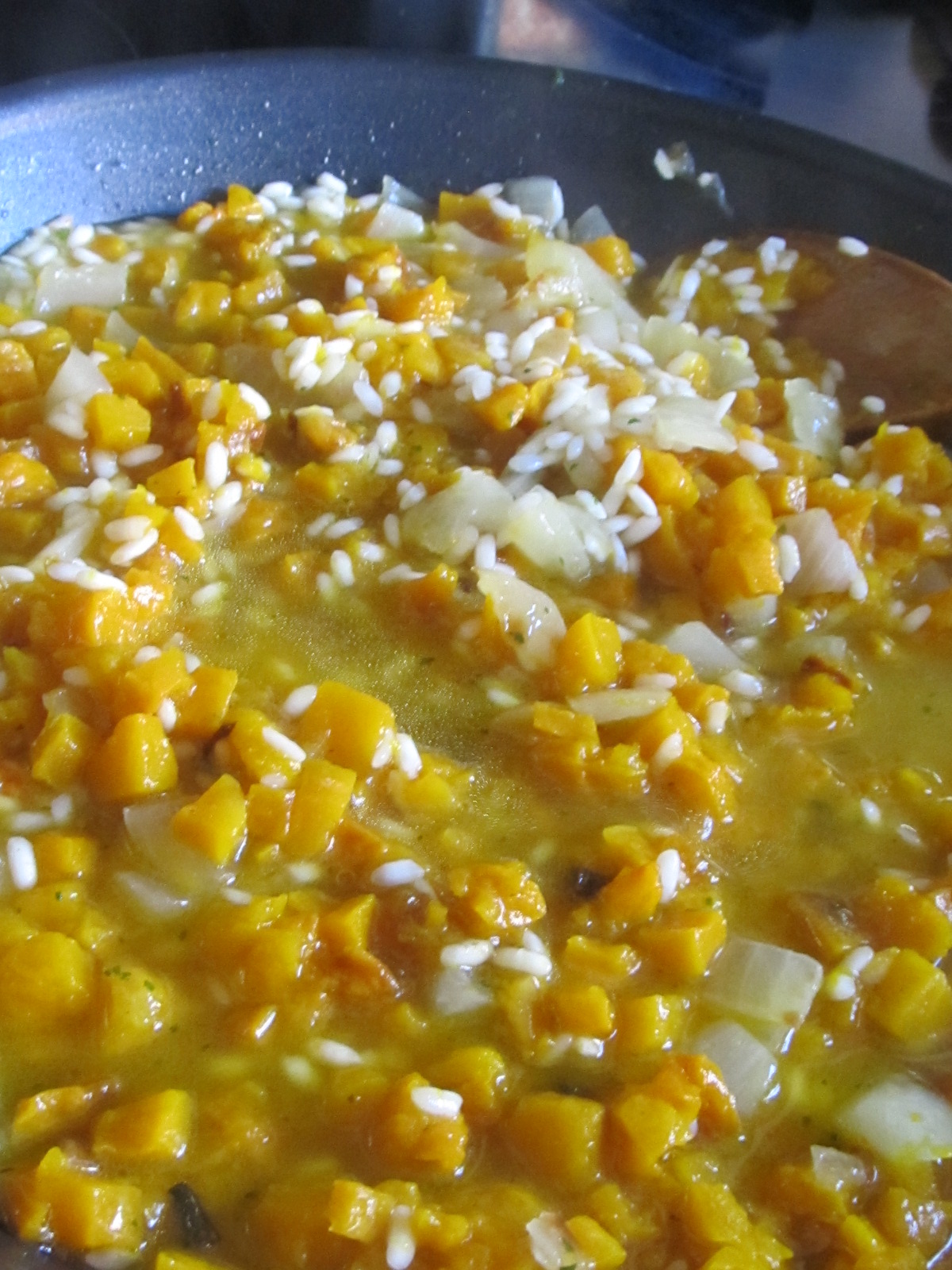
As promised this is a very, very squashy risotto so I actually use an entire large squash in this recipe. Start by peeling and chopping the squash, removing all the seeds and chopping into small pieces about the size of raisins. I am sorry, it is a lot of chopping, get the power ballads on to help you through it like you would at the gym as it really is worth it. I then roast the squash in a small amount of olive oil for just under an hour, the squash will go really soft and a lovely sweet smell will fill the rest of your house (but only if your house is as small as mine).

Once the squash is cooked you can start the risotto in a large pan. Start by chopping a large onion into small squares and fry the onion on a high heat in a little olive oil. Olive oil is one of those brilliant products where there are actually loads of fair trade and ethically sourced options. I recommend the Clearspring olive oil as it is organic as well as produced in Italy. They also make a beautiful gluten free Tamari sauce which I use as a substitute to soy sauce in a lot of dishes.

When the onion has softened in the oil and heat for about 5 minutes I add 2 finely chopped garlic cloves and then add Arborio rice directly to the pan. I use about 250g which will mean the risotto can serve 4 people (or fewer but more hungry people!). The majority of Arborio and risotto rice you find in supermarkets and shops are grown and processed in Italy which means that in theory the production should be in line with EU employment and environmental legislation but it is worth looking out for organic risotto rice which can be found quite easily.

post 4 photo 3

Continue to fry the rice and onion, stirring all the time and keeping an eye out for when the rice starts to become translucent. When the rice has got that nice see through quality about it then it is time to pour in some stock (see the carrot and coriander soup post for info on gluten free, ethical and sustainable stock cubes!) Make about 500ml of stock but initially pour in about 100ml and let it sizzle off quickly.

Add all the yummy, squishy squash to the pan and stir in along with more of the stock and plenty of chopped, fresh rosemary. I love the taste of rosemary and really don’t understand when people say it only matches with meat. I find it adds a depth to a lot of vegetable dishes and in this dish it cuts through the sweetness of the squash. Rosemary is originally a herb found in the Mediterranean I am keen to bring rosemary to new appreciation by pairing it with colourful dishes and flavours. I’m lucky enough to have a couple of rosemary bushes in my garden and nothing beats these lovely fresh herbs.

Once the rosemary is added it is time to turn the heat down to a medium level and continue to add stock and stir for the next 20 – 25 minutes as the rice absorbs the stock and turns into a juicy, filling looking meal.

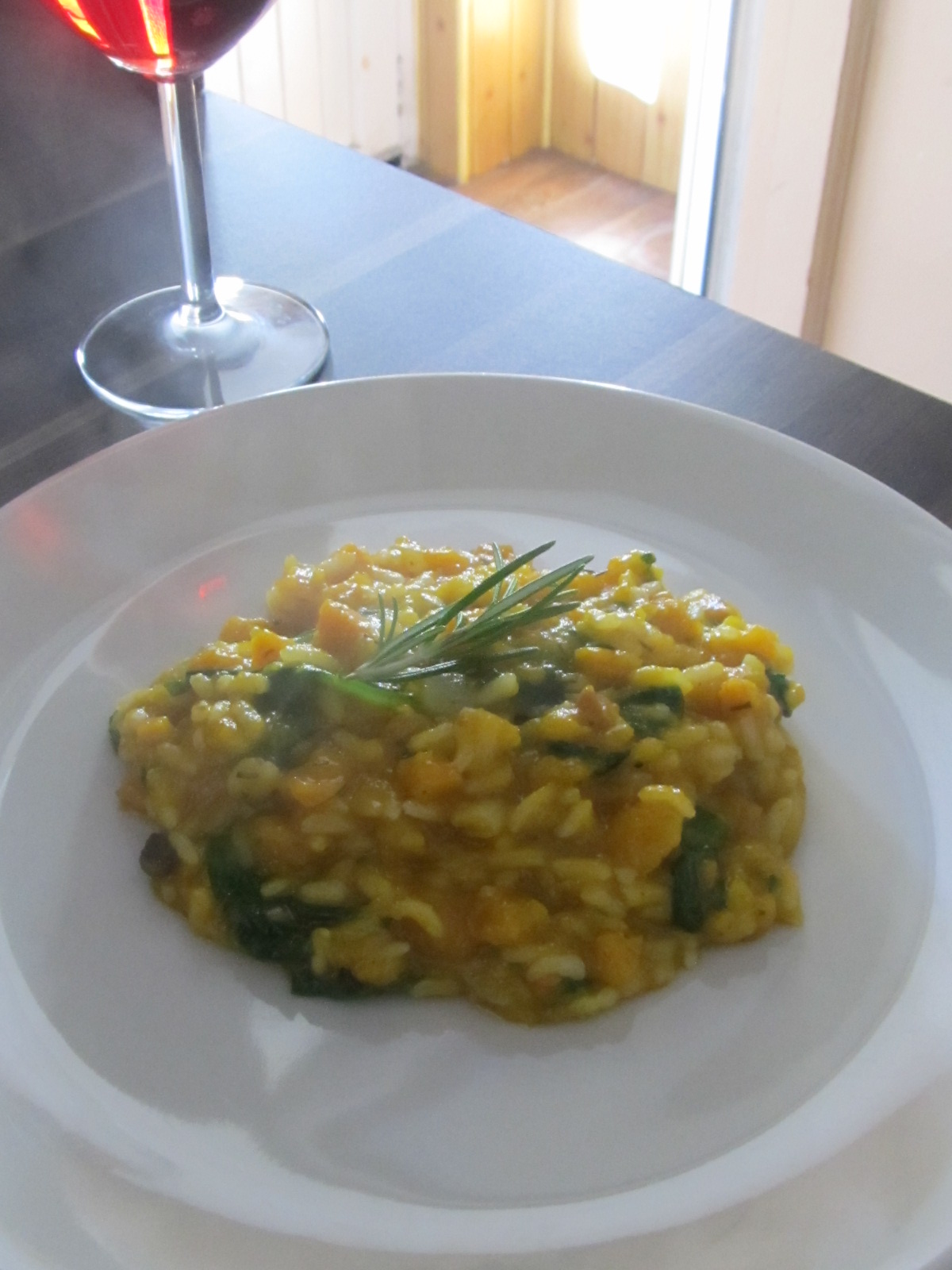
You will notice that as the squash cooks the beautiful, bright colour of the squash is absorbed into the rice, when all the stock has simmered off and the rice is soft and cooked it is time to add roughly chopped spinach and allow the spinach to wilt into the dish. Spinach is a great addition to vegetarian and vegan meals as not only is it really delicious but is also full of iron, folic acid and vitamins A, C and K. Paired with the potassium in the butternut squash vitamin K makes this meal a dream for healthy bones! Once the spinach is wilted the risotto is ready to serve. If you are as lucky as I am to have fresh rosemary you can garnish with a sprig ready to serve. I love Italian food and this recipe just proves that lactose free and gluten free food can be as filling, rich and creamy as you could ever want it to be. A real dinner time treat.

The finished dish - Bon Apetite
The finished dish – Bon Apetite

Sunny, ice cream surprise at Cresswell Crags

OK, so I really, really do promise I don’t only eat coconut but finding a lactose free coconut milk ice cream out whilst out on a sunny afternoon walk is just too good to miss!

I miss ice cream, especially on a day trip when all the lactose eaters are happily tucking in so imagine my delight at discovering that the cafe at Cresswell Crags stocks these magic little pots of Snowconut by The Coconut Collaborative who specialise in making the world yummy as well as fair! www.coconutco.co.uk

In addition the cafe has homemade gluten free cakes (sadly not lactose free as well) and rolls to go with the soup.

Cresswell Crags is a truly wonderful day out where you can walk through history glimpsing prehistoric life and nature in the rock caves and rock art as well as revelling in the well preserved, stunning natural gorge. Good work Cresswell Crags for making my day and welcoming the lactose free, the gluten free and the veggies amongst us. www.creswell-crags.org.uk

Beautiful Cresswell Crags

Carrot and coriander soup with a delicious coconut and chilli twist

OK, so I do promise I will post some foods on this blog that don’t involve coconut as a key flavour but fortunately today is not the day for that. Today I am going to share one of my favourite recipes for a traditional soup packed with beautiful complementary flavours which will make you jealous of the folks who haven’t had to discover Gluten free, lactose free, veggie cooking yet!

Post 2 photo
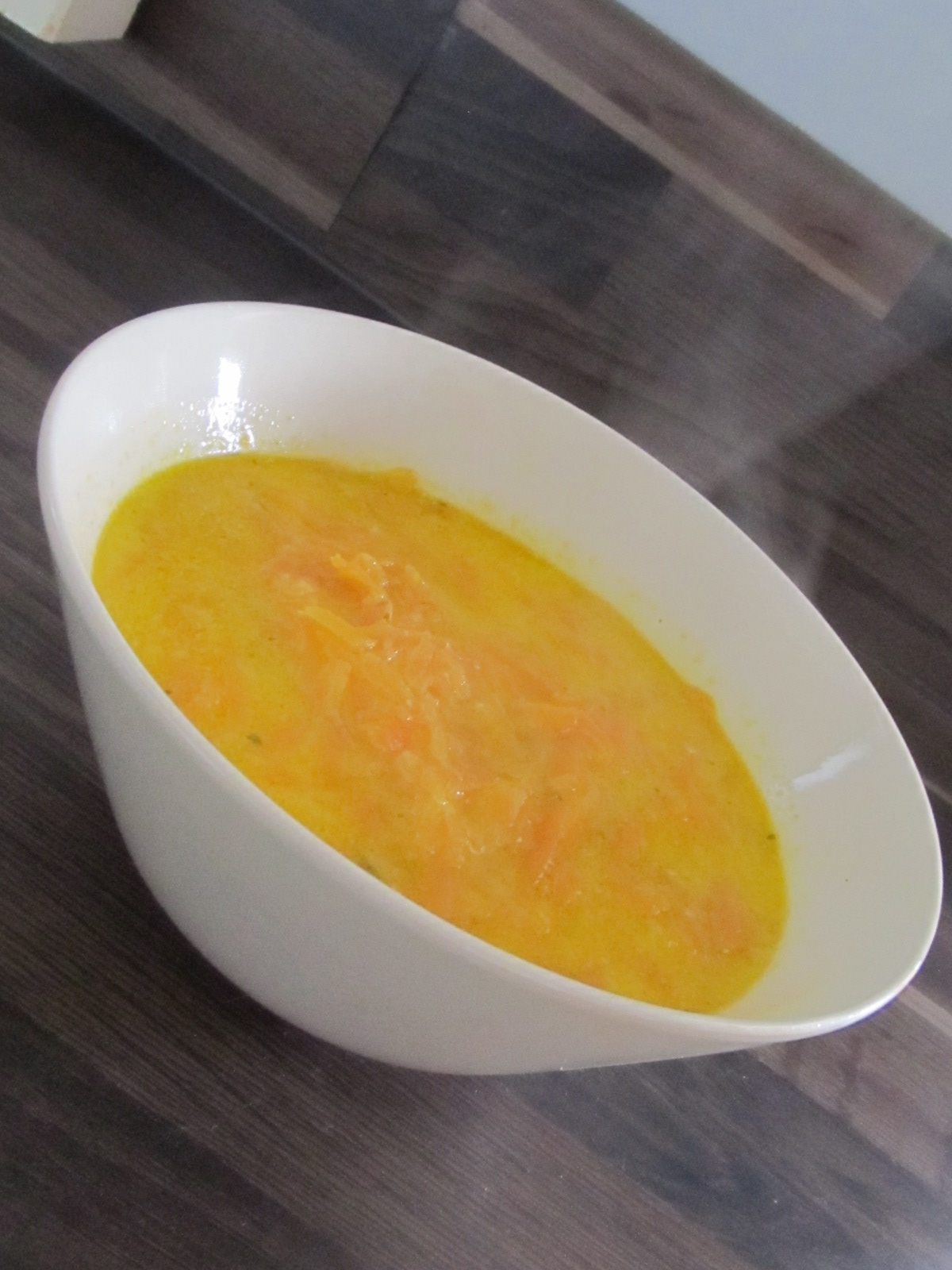
A delicious bowl of yummy vegan goodness

The 8 your old Natalie still nestled inside my brain would like to tell you that carrots are good for you because they will make you see in the dark; unfortunately this soup won’t save that much electricity and lighting but carrots are still really good for you. Carrots contain huge amounts of vitamins including vitamins A, K, E, C and vitamins B1, B2, B3 and B6. It’s like a vitamin party inside that vegetable.

I like grating carrots; it could be just joy of seeing such a bright amount of colour coming from nature but I really enjoy cooking with grated carrot. Once you have a huge, healthy pile of grated carrot (I grate about 5 medium sized carrots) you are set to go with this recipe. I lightly sauté the carrot in a large pan with a small amount of sesame oil for about 3 minutes. Then I add some of my favourite flavours ; minced garlic, finely chopped red chilli and lemongrass paste. You will get a gold star for mincing, finely chopping and pasting all of these from fresh ingredients but you can use the ready prepared pastes but please be really careful to check all the ingredients and information as even products that shouldn’t have any gluten, lactose or allergens in can sometimes be surprising! Gently stir the garlic, chilli and lemongrass into the grated carrot mixture as it warms and softens.

Gluten free, vegetarian stocks can be really tricky, the majority of stock cubes or powders contain wheat flour and /or barley making it a small cube of illness ready to ruin any meal for Coeliacs. The ideal solution is to make stock from scratch but if you struggle for time or indeed laziness I have found two good stock cube options to be Knorr vegetable stock cubes and Kallo vegetable stock cubes . Both Knorr and Kallo have reduced salt options but both do contain celery and celeriac which is the only allergen in either brand. Kallo is the brand I personally opt for as they use organic ingredients but as both these stock cubes contain palm oil there is an environmental impact to both.

Add about 500ml of the stock and reduce the heat to a low level allowing the soup to simmer gently for 20 – 30 minutes. I add plenty of finely chopped coriander as I personally love coriander. I know many people think of coriander as a soapy and unpleasant taste but I am lucky enough to find coriander to be a gentle and aromatic addition to soups. Living free from gluten, lactose, nuts, meat and mushrooms I feel embracing herbs and spices is a key route to a varied and exciting diet.

Once the carrots in the soup are soft it is time to add delicious coconut milk. Coconut milk can be found in all supermarkets but finding sustainable or fair-trade coconut milk can be harder. You can find fair-trade coconut milk in cans from the Traidcraft online shop www.traidcraftshop.co.uk. Alternatively you can make your own coconut milk using the more readily available fair trade desiccated coconut. To do this you need to heat the desiccated coconut with water bringing it to the boil and then strain thoroughly when it has achieved the required consistency.

When all the ingredients have been cooked and stirred in together you will have a wonderful, creamy and aromatic Thai soup which beats the need for a multi-vitamin hands down!

IMG_1608

This is very much my weekend approach to this soup but it is a really versatile recipe and the flavours are still great even if you don’t grate! For a weeknight approach I would chop the carrots, simmering the soup for longer, around 45 minutes and ensuring that after the coconut milk is added you give the soup a good whizz with a blender. You can also take the slow cooker chuck-all-the-ingredients-in-and-leave-it approach and just give it a blend when you get home.

Bringing some tropical sunshine to a South Yorkshire morning – the best breakfast to start my day!

It is really very easy to get up every morning and reach for a slice of gluten-free bread, the packet of lactose free spread and give out a big sigh as the toaster pops up with the same not-quite-as-tasty- as –the-food-you-used-to-eat before-and-you-know-it breakfast. Fear no more, I have found a way to kick start my days with more excitement than ever before. Bring on the tropical, coconut muesli!

Post 1 photo
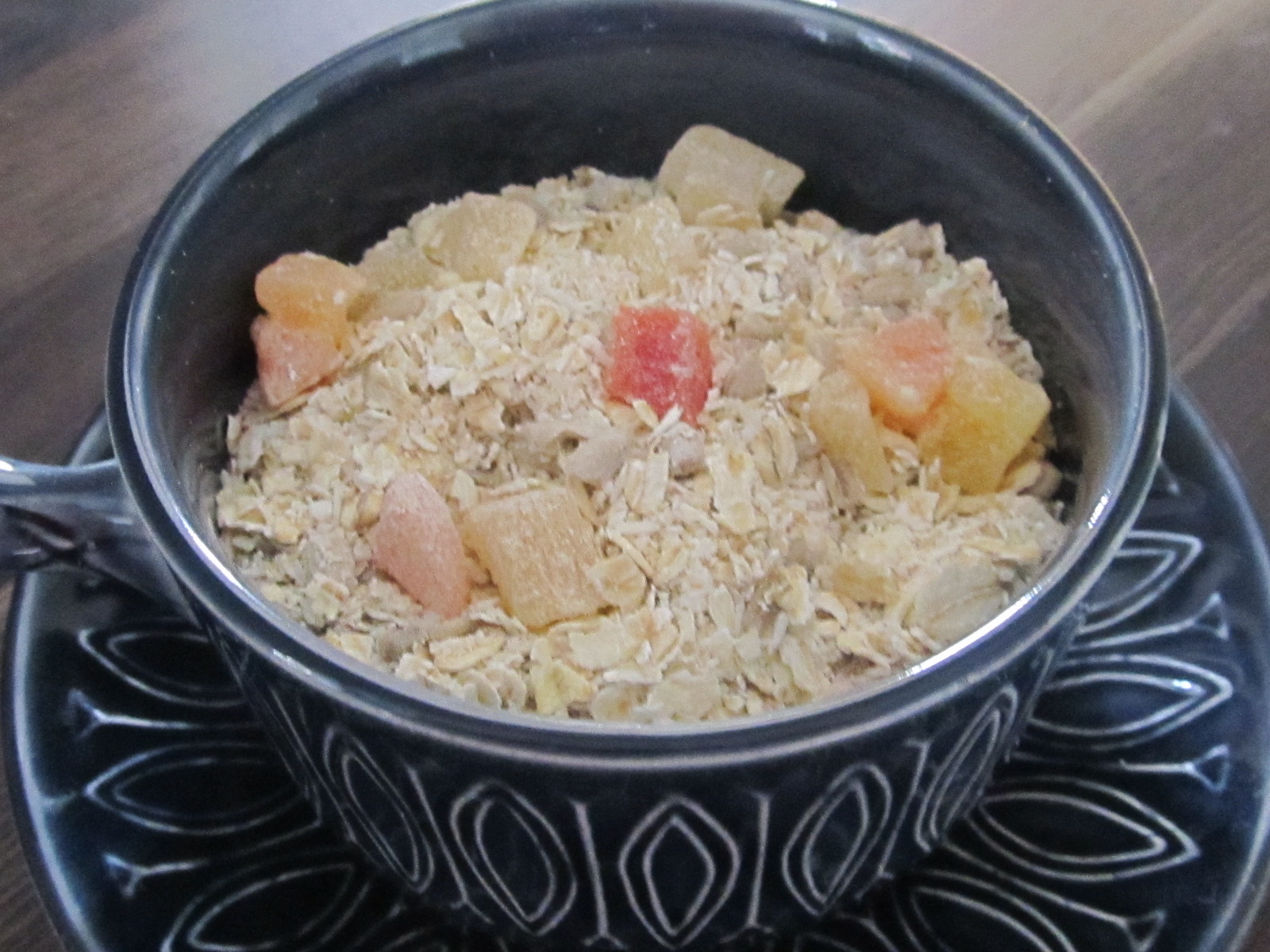
A perfect, healthy start to any morning

When I was first diagnosed it took me a little while to figure out I didn’t have to just choose a breakfast item from the small selection of suitable free from products and stick with it every day. Then I discovered gluten free oats. I’ve been using the Neal’s Yard Wholefoods Gluten free oats as I love the principles Neal’s Yard was founded on in the 70s. E.F Schumacher’s theory that ‘small is beautiful’ has inspired much of the ethical farming, food distribution and environmental movement including the great social justice work of organisations like Practical Action www.practicalaction.org. I like to know that with every small, beautiful , Gluten free oat my footprint on the world is positive rather than negative.

Unlike a lot of pre-prepared Gluten free cereals or breads there are no added sugars and fats, the ingredients are 100% gluten free oats meaning you aren’t going to be sending your blood sugars soaring and you can rely on a steady release of energy to stop you grabbing at mid-morning snacks. With these Gluten free oats you can make your own porridge (I would use a soya or lactose free milk) or like I do you can use them as a starter ingredient for a super tasty muesli.

The next ingredient I add are sesame seeds. Sesame seeds are seriously tiny bullets of goodness which will enrich any vegetarian diet. They contain 18% protein so they are a great protein fix without eating any meat or fish at all. They also have a mighty blast of oleic and folic acid inside their tiny shells. Oleic acid or fatty acids contribute to good cholesterol and a healthy heart. In addition to all this they are packed full of vitamins and minerals including Niacin, riboflavin, zinc, iron, calcium, copper, selenium and magnesium. These little beauties help to reduce the potential for brittle bones or anaemia that can accompany and unbalanced veggie or Coeliac diet and they add a lovely crunch to my morning.

Often loving called ‘a little fruit bat’ my parents as a child I have always loved fruit and it is my go to food to solve sweet tooth cravings. I have found that dried pineapple and papaya goes brilliantly in this muesli, it adds a perfect sweetness and flavour to breakfast. Again the Neal’s Yard Wholefoods is what I’ve used in my recipe (see above for hippie reasons why!) However if pineapple isn’t your thing you can add any fruit you like from traditional raisins and dried berries to more exotic or unusual fruits, I’m personally looking forward to a big bowl of date and fig muesli once Autumn comes around and to give me a big potassium boost!

Finally to really brighten my day with exotic flavours I add desiccated coconut to the Gluten free oats, sesame seeds, pineapple and papaya mix. Coconut adds a real sense of luxury to this muesli, even on those mornings when your pillow has never looked so inviting and the thought of doing anything remotely useful is evading you, coconut can lift your mood right up. Unfortunately coconut isn’t quite the wonder health booster that sesame seeds are, though it is still rich in minerals and dietary fibre it is higher in saturated fats but fortunately a little amount goes a really long way and adds loads to this breakfast. I use 450g Gluten free oats, 100g sesame seeds, 100g pineapple and papaya and then 50g desiccated coconut but you can mix up the weight according to your own preference.

Hopefully this has helped to inspire your breakfasts and, like me, you can banish the ready-made, sugary gluten free cereals and replace it with a healthy, balanced and tasty morning muesli. It goes great with soya milk or yoghurt and I hope you enjoy it as much as I do.